As I stood in my kitchen last Sunday, the savory aroma of sesame oil filled the air, bringing back memories of a cozy dinner at my favorite Korean restaurant. There’s something magical about Bibimbap – it’s a symphony of colors and textures, all harmonizing in one bowl. This dish has become one of my go-to meals, especially when I want something vibrant yet deeply nourishing. It felt only natural to share my version of this classic Korean dish, infused with a plant-based twist that makes it equally hearty and satisfying. What could be better than a warm bowl of rice topped with a rainbow of veggies, a luscious sauce, and a sprinkle of love?
Why You’ll Love This Recipe
Let’s talk about why this Korean-Inspired Vegan Bibimbap Bowl deserves a spot on your dinner table. First and foremost, the simplicity! It’s an incredible one-bowl meal that saves time on busy nights – no juggling multiple pots and pans here. Each ingredient adds a layer of flavor, and I promise, you’ll feel like you’ve just ordered takeout from your favorite spot downtown, while actually being the chef of your own kitchen.
Plus, it’s customizable! You can use whatever vegetables you have on hand, add your favorite proteins, or leave them out for a pure plant-based experience. It’s like a blank canvas – vibrant, fresh, and genuinely satisfying. You’ll never feel guilty digging into this bowl of joy, especially when you take that first heavenly bite. Trust me, it’s a dish you’ll want to savor over and over again, especially as the seasons change and you can mix things up!
What It Tastes Like
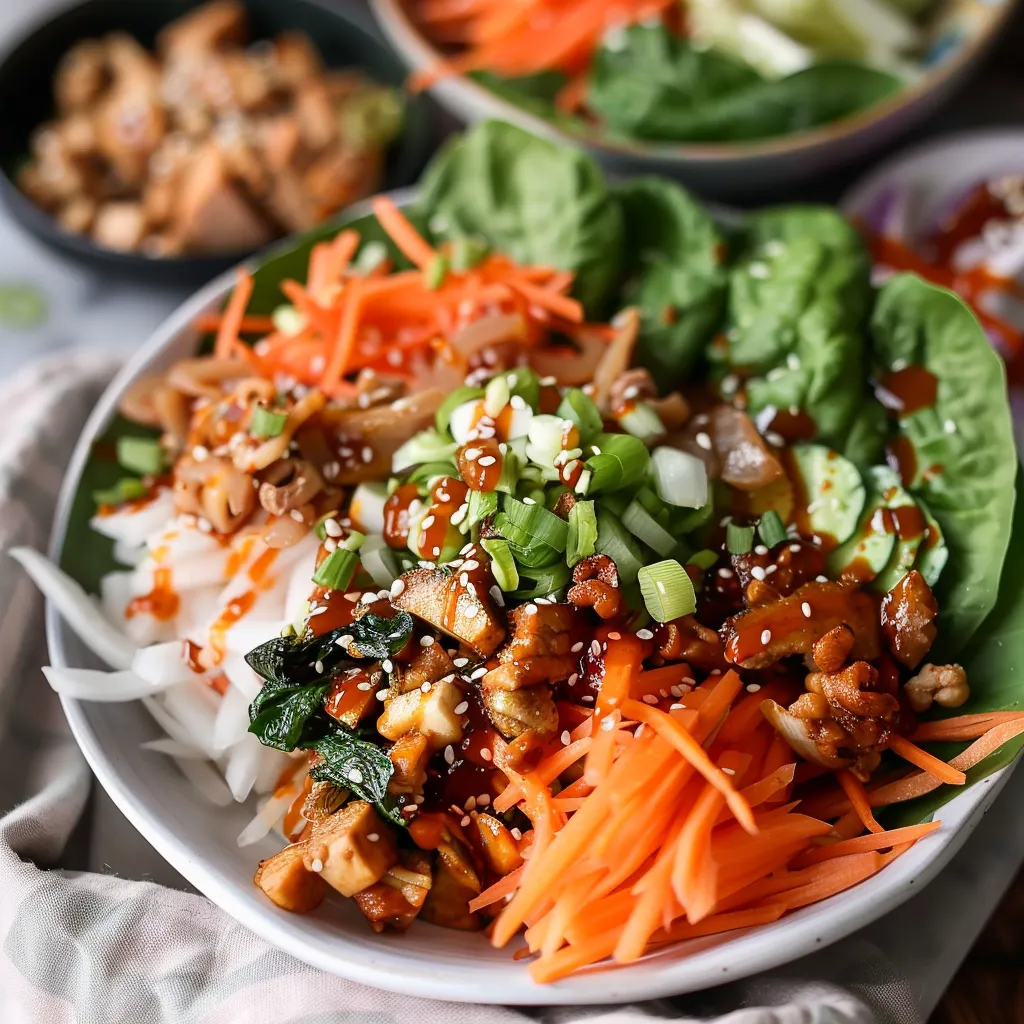
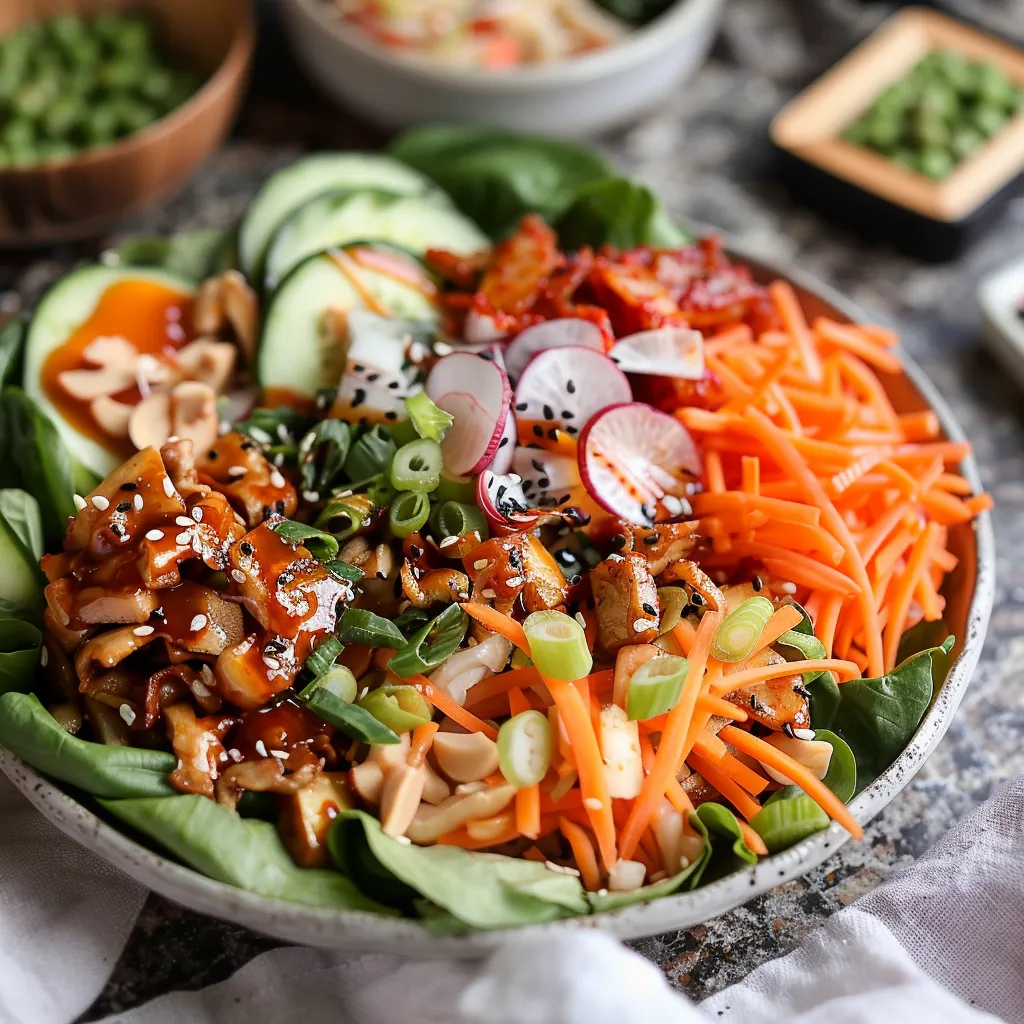
Ah, the flavor! Imagine the earthiness of perfectly cooked brown rice mingling with sautéed veggies, each piece crisp yet tender. There’s a gentle crunch from the fresh cucumber and a warm, toasty flavor from the sesame oil that keeps you coming back for more. Then there’s the zing of gochujang, a sweet and spicy condiment that dances with every bite, long after you’ve cleaned your bowl. And let’s not forget the creamy tahini dressing that wraps everything in a cozy hug. It’s comfort food you didn’t realize you were craving until that first spoonful hits your taste buds. Honestly, it’s like a warm embrace on a chilly day – blissful and nurturing!
Ingredients You’ll Need
- 1 cup cooked brown rice: The base of our bibimbap, providing a nuttiness that complements the other flavors.
- 1 cup assorted vegetables: Think colorful bell peppers, carrots, zucchini, and spinach – add any that catch your fancy!
- 1 tablespoon sesame oil: Adds that warm, nutty flavor that’s essential.
- 2 tablespoons soy sauce: For a punch of savory taste that brings the whole dish together.
- 1 tablespoon gochujang: This Korean chili paste is a game-changer – it gives a sweet and spicy twist!
- 1 tablespoon tahini: For a creamy texture that balances the spice from the gochujang.
- 1 tablespoon rice vinegar: To brighten up the flavors.
- Optional Additions:
- Grilled tofu or tempeh for protein.
- Avocado slices for creaminess.
- Kimchi for a spicy and fermented kick.
- Special Garnishes:
- Toasted sesame seeds for a crunch.
- Sliced green onions for a fresh finish.
- Microgreens for an aesthetic touch.
Step-by-Step Instructions
Now, let’s get cooking! This process is super straightforward, making it perfect for beginner cooks and seasoned pros alike.
- Cook the Brown Rice: If you haven’t done this before, follow the package instructions. Generally, the ratio is about 1 part rice to 2 parts water, bring it to a boil, cover, and simmer until fluffy. Don’t rush this step – it’s where the magic happens!
- Prep the Vegetables: While the rice is cooking, wash and chop your vegetables into thin strips or bite-sized pieces. This keeps everything balanced on the palette and visually appealing.
- Sauté the Veggies: Heat sesame oil in a large pan over medium heat. Add your veggies, sprinkle with soy sauce, and stir-fry for about 3-5 minutes. You want them crispy yet tender. Remember to keep things moving in the pan! You’re not making a veggie stew – it’s all about that crunch.
- Make the Sauce: In a small bowl, whisk together the gochujang, tahini, and rice vinegar. Give it a taste and adjust as needed. Want it spicier? Add more gochujang. Prefer it creamier? A splash more tahini should do the trick!
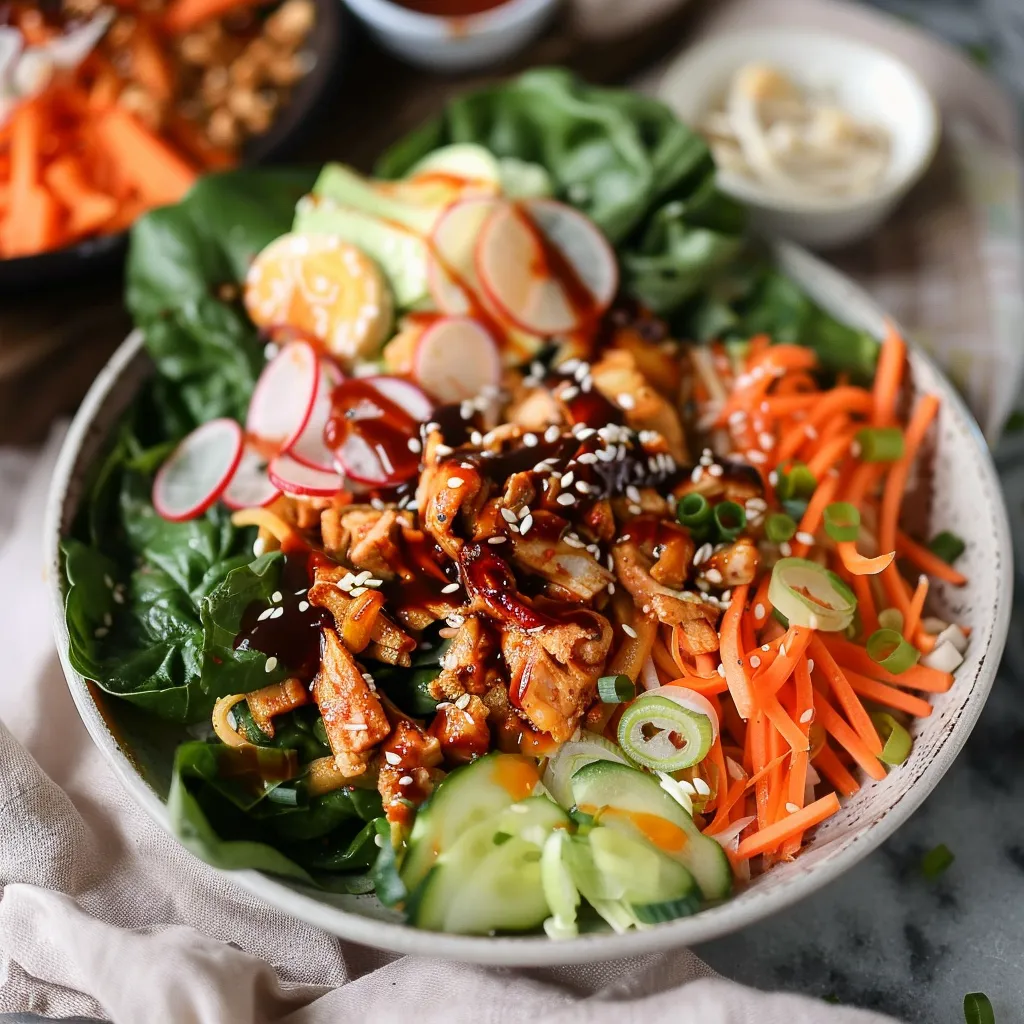
- Assemble Your Bowl: Start by placing your brown rice at the bottom of a deep bowl. Now, lovingly arrange the sautéed vegetables on top, like you’re curating a work of art! Just don’t forget to save some space for that gorgeous sauce.
- Garnish: Top with a sprinkle of sesame seeds, sliced green onions, and any optional add-ons you fancy. Those garnishes are not just for looks – they add lovely textures and flavors.
- Dig In! Take a moment to appreciate your handiwork, then dive in with gusto. Mix everything together in that bowl before the first bite – embrace the chaos!
Recipe Variations
One of the beautiful things about Bibimbap is how flexible it is! Feeling adventurous? Swap out the brown rice for quinoa for a nutty twist or even use cauliflower rice for a lower-carb option. If you’re craving something heartier, roasted sweet potatoes add a sweet contrast to the dish.
Want a different flavor profile? Try adding miso paste to the sauce or switch up the veggies according to the season – think roasted Brussels sprouts in the fall or fresh asparagus in the spring. Your bibimbap, your rules!
Serving & Storage Tips
If you have any leftovers (though I can’t promise you will), store them in an airtight container in the fridge for about 3 days. When ready to enjoy again, simply pop it in the microwave, or if you’re feeling fancy, heat it in a pan to get that crispy rice bottom once more. It’s truly delightful!
Leftover components also work well in wraps or salads, giving your lunches a flavorful boost throughout the week. Trust me; your future self will thank you!
Helpful Tips
So, what are the top things to keep in mind? First, don’t be afraid of the gochujang – it can be spicy, but it’s all about balancing flavors. Start small and build up as you taste. And when you’re sautéing, keep the heat at medium; you want that beautiful color without burning.
Also, if you find yourself struggling to keep your rice warm while you prep your veggies, simply stick it in a covered bowl over a pot of hot water to keep the steam locked in. Voila – warm, fluffy rice awaits!
Special Equipment
- Large Frying Pan or Wok: Helps evenly sauté the veggies while allowing you plenty of space to stir them around. You don’t want them crowded – they need room to shine!
- Sharp Knife: A good knife makes chopping so much easier. Trust me, you’ll save a ton of time and effort with a sharp one!
- Chopping Board: This is like your stage – make it nice and clean, so each chopped piece of vegetable can shine in its own right.
- Whisk: For mixing that luscious sauce. A small whisk lets you combine everything smoothly without any clumps.
FAQ
Can I make this recipe gluten-free?
Absolutely! Just swap out regular soy sauce for tamari, and you’re good to go. Plenty of gluten-free options on the market will complement this dish beautifully!
What other vegetables can I use?
The sky’s the limit! Broccoli, snap peas, mushrooms, and even roasted beets work wonders. Use whatever you have on hand – it’s all about making it personal!
Can I meal prep this bowl?
Yes! You can prepare all your components in advance. Just store them separately and assemble when you’re ready to eat for the freshest flavor.
Is this recipe spicy?
It certainly can be! The gochujang adds a kick, but you control the heat. Start small, taste, and add more if desired. No fiery surprises here!
How can I make this recipe oil-free?
If you’re looking for an oil-free version, simply sauté your veggies with a splash of vegetable broth or water. It keeps things light while still allowing for that essential flavor!
Conclusion
This Korean-Inspired Vegan Bibimbap Bowl is a soulful recipe that transforms ordinary ingredients into something extraordinary. It’s hearty, wholesome, and yes, exceptionally vibrant – just like the memories it brings to life. Each bowl is a celebration of flavors and textures, perfect for family dinners or cozy nights in when you want that restaurant-quality meal at home. I hope this dish has found a way into your rotation and becomes as cherished as it has for me.
So next time you’re in the mood for something delicious yet simple, remember this recipe. And if you try it out, I’d love to hear how it turned out or any special twists you added! Your stories and versions bring this little corner of the internet to life.
Print
Delicious KoreanInspired Vegan Bibimbap Bowl Recipe Unveiled
- Total Time: 35 minutes
- Yield: 2 servings 1x
- Diet: Vegan, Plant-based
Description
Discover a flavorful Korean vegan bibimbap bowl thats easy to make Enjoy fresh veggies savory spices and vibrant tastes in every bite
Ingredients
Instructions
- Prep Time: 20 minutes
- Cook Time: 15 minutes
- Category: Dinner
- Cuisine: Korean
Nutrition
- Serving Size: 1 bowl
- Calories: 350 calories
- Sugar: 4g
- Fat: 15g
- Saturated Fat: 15g
- Carbohydrates: 50g
- Fiber: 8g
- Protein: 10g